Category Archives: History

Tu’ B’Shvat

Pin on ART
Kela Loplu

Here is today’s I Think Speech’ Podcast

The occult Knapp in 2020 | Tree of life art, Consciousness art, Occult
Mikael Benaane

If we learn, in nature, to receive the soul element together with sense perception, then we shall have the Christ relationship to outer nature. This Christ relationship to outer nature will be something like a kind of spiritual breathing process… When we make our way through the world with an awareness that together with everything we see, everything we hear, there is soul and there is spirit flowing into us, and with the awareness that at the same time soul is flowing from us out into the world, then we shall have gained the awareness needed by humankind for the future.” ~Rudolf Steiner (GA 194)

The Cadeusus / The Tree of Life | Symbols, Ancient symbols, Sacred geometry

29 January 2021 – “Speaking with the Stars”: Mercury is heading southwest in his retrograde dance. The solar system’s smallest planet is high in the west at sunset next to the the Wolf Moon.

Image result for full february moon painting

Snow Moon all aglow
Hunger Moon watch us grow
Wolf Moon howling low
Quickening Moon help us know

~hag
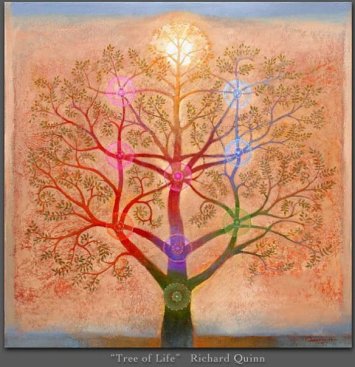
It’ time to celebrate Tu B’Shvat – the “New Year for the Trees ” which occurs every year around the Full Quickening/ Wolf Moon, which signals the Cross Quarter between Winter Solstice & Spring Equinox. This is when the sap begins to rise.

Kabbalists have used the tree as a metaphor to understand the relationship between the spiritual & physical worlds. Spiritual Science tells us that the human being is a reversed plant. Our head is the root. The higher spiritual realms are where these roots come from, which then ultimately manifests their influence through branches & leaves – our heart & lungs & limbs, our thinking, feeling & willing in the world.

In the 16th century, the Kabbalists compiled a Tu B’Shvat “Seder*,” similar to the Seder for Passover. It involves enjoying the fruits of the tree, & discusses philosophical & Kabbalistic concepts, like the idea that by eating with the highest intention we can repair the ‘fall’. The ‘sin’ against the Tree of Knowledge was that Adam & Eve ate its fruit before it was ripe.

Paul Rubens

So, what is it about waiting (perhaps, wading) that transforms knowledge from hurtful to healthy? Do we have faith that the spring will come & everything will grow & ripen in its season?

Through conscious eating, we have a daily opportunity to correct a part of our soul, so deep & intrinsic that it reaches back into the Garden of Eden.

Image result for tu bishvat 7 species

The custom on Tu B’Shvat is to eat fruits from the seven species for which the Earth is praised: “…a land of wheat and barley and (grape) vines and fig trees and pomegranates, a land of olive trees and (date) honey” (Deut. 8:8).

On Tu B’Shvat, it is also customary to eat a “new fruit” something we have not yet tasted this year.

Image result for tu bishvat 7 species

This festival lets us ask: Am I getting the spiritual food I need, to truly live with grace, or is my tree being blown down by the forces of information overload & rampant materialism?

Am I part of a strong community, providing a warm & nurturing environment? Or am I cast into the pale bleak anonymity of urban life & cyberspace?

Am I looking to future generations knowing that I am providing them with the proper foundations for their lives?

Image result for tu bishvat 7 species

The word “Shvat” is also related to the Hebrew word for a staff or rod. A staff can be used as a symbol of power; or as a cane to lean on. This is an underlying theme of the month.

So as we open our thinking, feeling & willing to align with the rising sap, in gratitude for the fruits of life; we can use this time to focus on the idea of consciously using our daily behavior as a medium for spirituality.

Tu B'Shevat Seder: Honest Ritual | Food, Seder, Cheese board

*Tu B’Shvat seder

PREPARATIONS: lots of fruit, including: The seven species:

Figs, Dates, Pomegranates, Olives, Grapes(or raisins) wheat = Challah bread and        barley, various nuts with the shells (walnuts, almonds, pistachios, coconut), and fruits with peels (oranges, pomegranates, avocado) Other fruits with edible seeds (e.g. blueberries) Other fruits with inedible pits (e.g. peaches, plums) Wine or grape juice, both white and red. Charity box

THE SEDER BEGINS

The leader asks: Why do we celebrate the New Year for the trees on Tu B’Shvat?

All say: Since the Holy Temple was destroyed, farmers could no longer bring the First Fruits (Bikkurim) as an offering. So on Tu B’Shvat we offer the “fruit of our lips,” in praise for all the fruit trees in the world.

A participant says: Tu Bishvat marks a new period for taking tithes, a portion of which is given to the poor. Therefore: “When a person is privileged to eat in the presence of Love, they must show appreciation by giving charity to the poor and feeding them, just as The Source in Her bounty feeds them.” (“Zohar” – Parshat Trumah) At this point it is appropriate to pass around a ‘pushka’ to collect tzedakah. After the seder, the money should be donated to a worthy cause.

A participant says: The Mishnah in Tractate Rosh Hashana says that Tu B’Shvat is New Year for the TREE (singular). This reference to a singular tree alludes to “The Tree” — the Tree of Knowledge in the Garden of Eden. “And The Divine said: ‘Let the earth put forth grass, herb-yielding seeds, and fruit trees bearing fruit of its kind.’ ‘Fruit tree’ means the Tree of Knowledge of Good and Evil, which put forth blossoms and fruit. ‘Bearing fruit’ is the tzaddik, the basis of the world. ‘Of its kind’ means all the human beings who have in them the spirit of holiness, which is the blossom of that tree. This is the covenant of holiness, the covenant of peace — and the faithful enter into that kind and do not depart from it. The Tzaddik generates, and the tree conceives and brings forth fruit of its kind.” (“Zohar” – Bereishit 33a)

Meditation: “One should intend that they are eating at the celestial table, in the Garden of Eden before the Divine Presence.” (“Raishit Chochma” — Shar HaKedusha)

Take a few moments and think deeply about being in the company of The Divine… sitting at the table of The One… experiencing the sublime spiritual pleasure of a relationship with the Creator Herself.

A participant says: humanity’s name — “Adam” — is derived from the word Earth, adama. And Eve = “a living being’. While humanity is at once the pinnacle of creation, we are also dependent on the earth for our most basic needs. The Torah, refers to the human being as a “tree of the field” (Deut. 20:19). Our sages learn from this verse a prohibition against any needless destruction. In other words, fruit trees serve as the archetype for our relationship and responsibility to our environment. It was through a mistake in eating unripe fruit that caused Adam and Eve’s exile from the Garden of Eden. Eating fruit is a metaphor for our interaction with this world. Correct usage leads to a perfected world and spiritual bliss. Misuse can lead to destruction and spiritual degradation. The seder of Tu B’Shvat is our opportunity to rectify the past iniquity and return once again to our rightful place within the Garden.

All say: Adam and Eve by eating from the Tree of the Knowledge of Good and Evil created consequences. To get back to wholeness we eat our fruit today with pure intentions, as if from the Tree of Life.

A participant says: In the Talmud, Rabbi Abbun said: “Each life form, especially fruit, is entrusted to a specific angel”. By saying a blessing over a fruit, we empower that angel to reproduce more of that fruit. The Talmud says that someone who eats and doesn’t say a blessing is considered a thief. Why? Because every aspect of God’s creation is inherently holy. A blessing re-infuses the world with holiness. Eating without a blessing, however, lowers the level of holiness in the world without replacing the loss — and is regarded as theft.

A participant says: The Baal Shem Tov, was once visiting the home of Rabbi Yaakov Koppel. When Rabbi Yaakov danced in front of his Shabbos table for an hour, the Baal Shem Tov asked to explain this unusual custom. Rabbi Yaakov replied: “Before I taste physical food, I absorb the food’s spiritual essence. In doing so, I become so excited that I sing and dance!”

The leader says: Everything in the physical world is a metaphor for a deeper spiritual concept.

Eating is to the body, what knowledge is to the soul. When we eat, we internalize the good part of the food — and through that we grow and develop. Similarly, when we learn a new piece of information, we must “chew it over,” digest it, and integrate it into our very being. Only then can we truly grow in wisdom and spirituality.

GRAIN PRODUCTS

Now comes the part we’ve been waiting for: drinking wine and enjoying other delicacies! Wheat and barley are the first two of the seven species. “A land of wheat and barley, of vines, figs, and pomegranates, a land of olives and honey” (Deut. 8:8).

The leader says: Before saying the blessing, let us pause and reflect on our good fortune. A blessing is a “thank-you note” to our Creator. The sages say: “Who is the wealthy person? The one who is happy with what they have.” The more we appreciate our gifts, the more sincere is our thanks, and the more sublime is our pleasure. Recite the blessing on the bread: “Baruch Ata Adon-ai, Elohai-nu, Melech HaOlam ha-motzie lechem min ha-aretz.” “Blessed are you, Creator of the Universe, who fashions bread from the Earth.”

Meditation: Savor each bite of the cake or bread. Appreciate that The Divine loves us and created everything for our good.

FRUIT – On Tu B’Shvat, we eat the fruit by which The Divine praises the Earth. As the verse says: “The trees have borne their fruit, fig tree and vine have yielded their strength. Children be happy & rejoice”.

The order of eating will be: olives, dates, grapes, figs, pomegranates.

“Baruch Ata Adod-nai Elohai-nu Melech HaOlam boray pri ha-aitz.” “Blessed are you Creator of the Universe, Who creates the fruit of the tree.”

If there is a seasonal fruit at the table which you have not yet tasted this season, say the following additional blessing before eating the fruit: “Baruch Ata Ado-noi, Elohai-nu Melech HaOlam, sheh-he-che-yanu vi-kee-yimanu vi-hee-gee-yanu laz-man ha-zeh.” “Blessed are You Creator of the Universe, Who has kept us alive, sustained us, and brought us to this season.”

Take each fruit one by one, as the appropriate paragraph below is recited. Enjoy the many unique flavors and textures. Reflect on the reality that the Creator of time and space wants us to take pleasure in everything that is in the world.

Participants take turns saying the following paragraphs:

Olives: “The Divine called your name ‘a green olive tree, nice and beautiful fruit.’” (Jeremiah 11:16)

“Your children shall be like olive plants around your table.” (Psalms 123:3)

The Sages taught: “Just as olive oil brings light into the world, so do the people bring light into the world.” (Midrash — Shir HaShirim Raba 1:2) & so may it be

Dates: “The righteous shall flourish like a palm tree” (Psalms 92:13). The righteous are fruitful and sweet, just like a date palm. “Your stature is like a palm tree” (Song of Songs 7:8). “No part of the palm tree is wasted. The dates are for eating; the Lulav branches are for waving in praise on Sukkot; the dried thatch is for roofing; the fibers are for ropes; the leaves are for sieves; and the trunk is for house beams. So too, every one us is needed

Grapes: “Just as a vine has large and small clusters and the large ones hang lower, so too the people: Whoever labors in Torah and is greater in Torah, seems lower than his fellow [due to his humility].” (Midrash – Vayikra Raba 36:2)

Figs: Rabbi Yochanan said: “What is the meaning of ‘He who tends a fig tree will eat its fruit’? (Proverbs 27:18) Why is the Torah compared to a fruit tree? Figs on a tree do not ripen all at once, but a little each day. Therefore, the longer one searches in the tree, the more figs he finds. So too with Torah: The more one studies, the more knowledge and wisdom one finds.” (Talmud – Eruvin 54a)

Pomegranates: “Let us get up early to the vineyards. Let us see if the vine has flowered, if the grape blossoms have opened, if the pomegranates have budded. There I will give you my love.”

“If the pomegranates have budded.” These are the little children who are like the many seeds of a pomegranate.” (Midrash – Shir HaShirim Rabba 6:11)

For discussion: Rami Bar Yechezkel once came to Bnei Brak and saw goats grazing under a fig tree. Honey was dripping from the figs and milk from the goats — and they became intermingled. He said: “Behold, a land flowing with milk and honey!” (Talmud – Ketubot 111b) Share a story or experience where life flowed with the sweetness of milk & honey.

WINE: At the Tu B’Shvat seder, it is traditional to drink four cups of wine, similar to the Passover Seder.

      First Cup – pure white

      Second Cup – pale pink (white with a drop of red wine)

      Third Cup – darker pink (with more red added)

      Fourth Cup – almost totally red (with only a drop of white)

A participant says: White wine represents nature in potential. Red wine represents nature in full bloom. On this day, we begin to leave the winter behind and move into a period of renewal and the fullness of life. It is stated in the Zohar: “Wine has two colors — white and red. White is from the right side [of kindness]; red from the left side [of strength and judgment].”

As we progress from white to red, we move from potential to actuality. We are able to appreciate The Divine discernment as well as kindness. We see The Divine design and goodness in the world with increasing clarity.

A participant says: “Wine rejoices the heart of man.” This refers to the wine of Torah. Yayin (Hebrew for wine) equals 70, the numerical value of Sod, meaning “secret.” [Wine represents the hidden aspects of the Torah.] (“Zohar” — Parshat Pinchas).

A participant says: The Talmudic section dealing with agriculture is called “trust in The Divine.” When a farmer plants a seed, trust in The Divine gives him the strength to survive the winter. On Tu B’Shvat we begin  to see that trust rewarded. Similarly, when we plant a seed for personal growth, it requires trust and patience to survive the ‘cold,’ before we see the fruits of our labor.

We will now drink four cups of wine (or grape juice) in conjunction with four different categories of fruit. Each of these pairs correspond to each of the four spiritual realms (from lowest to highest):

      action — asiah

      formation — yetzirah

      creation — briah

      emanation of pure Spirit — atzilut

Each level becomes more spiritual and connected to the Creator. As we eat, we elevate the fruits — and ourselves — through the various levels, rising higher and higher.

A participant says: The Almighty said: “Although wine can be a source of trouble in this world, in the future I shall make it only a source of joy, as it says: ‘And it shall come to pass on that day, that the mountains will drip with sweet wine’ (Yoel 3:18).” (Midrash – Vayikra Raba 12:5)

Pour the first cup of wine (all white):

All say the following blessing, and then drink from the wine

“Baruch Ata Adon-ai Elohai-nu Melech HaOlam boray pri ha-gafen.” “Blessed are Creator of the Universe who creates the fruit of the vine.”

Slow down and really enjoy the taste of the wine. The most prestigious universities offer courses in wine tasting. There’s a lot to appreciate in life. Be a connoisseur!

The leader says: We now eat fruits with inedible shells or peels. For example: nuts, pomegranate, oranges, avocado. The edible part of the fruit corresponds to perfection and purity, while the inedible is connected to deficiency and impurity. This is parallel to the realm of action (asiah), the lowest of the spiritual worlds — a world which is enveloped by materialism, just as the fruit is enveloped in its peel/shell.

A participant says: Rabbi Tarfon compared people to a pile of walnuts. If one walnut is removed, each and every nut in the pile is shaken and disturbed. So too, when a single person is in distress, every other person is shaken. (Midrash – Shir HaShirim Raba 6:11)

A participant says: “As it is the virtue of a nut to be closed in from all sides, so too the Heavenly Chariot which goes out of the Garden of Eden is hidden on all sides. And just as the four sections of a walnut are untied at one side and separated on the other, so are all parts of the Heavenly Chariot united in perfect union — and yet each part fulfills a specific purpose.” (“Zohar” – Shmot 15b)

Meditation: As you toss away the peels and shells, see one of your bad character traits (anger, impatience, etc.) being tossed away. In your mind’s eye, picture the bad trait as the shell. Then, as you toss it away, feel the trait leaving you. That’s not the real you. The real you is the fruit… delicious and nourishing. See the trait going into the compost to release that energy & create a fertile loom for your true fruit.

CUPS 2, 3,4 – Drink the second cup — pale pink (white with a drop of red).

The leader says: We now eat fruits with inedible pits. For example: dates, olives, peaches, plums, cherries. This stage is comparable to the realm of formation (yetzirah). The edible parts of the fruit represent holiness. Pits represent impurities which have penetrated the holiness. As the color of the wine begins to gets darker, we can start to see potential turn into reality. The inedible part has now moved from the outside to the inside of the fruit. This is an advancement toward purity. In addition, the inedible part is no longer waste; it is a seed with potential to grow.

Meditation: Imagine one of your bad traits as this seed. Really see it. Then, see that trait growing and developing into something great. This trait no longer holds you back, but propels you forward. Many great people have turned their faults into assets. You too can become great.

Drink the third cup of wine (dark pink).

The leader says: Now we eat fruits that are completely edible: blueberries. This is the realm of creation (briah), the highest level in the created world. (The three lower worlds — asiyah, yetzirah, and briah — are referred to as ma’aseh bereishit, “the act of creation.”)

Meditation: Things are coming close to their full potential. Even the seeds are now edible. They not only have future potential, but are also delicious and ready to eat right now. Think about an area of life you would like to improve. Picture your ideal self. Realize the real you. Now, for the rest of Tu B’Shvat, actually be that person. Act as if you’re already there. The experience can be transformational.

Drink the fourth cup (red with a drop of white).

The leader says: We now taste the fruit on the table with the best fragrance. This is comparable to the realm of pure Spirit (atzilut). This level is called the ma’aseh merkava, “the act of the Chariot.” The prophet Ezekiel saw a Chariot in his vision relating to the mysteries of creation.

A participant says: In Leviticus 23:40, the Etrog is described as pri aitz hadar — “fruit of the majestic tree.” The Etrog is the most spiritual of all trees, as it’s fruit and bark both have fine taste and smell.

On Tu B’Shvat, it is fitting to pray for a beautiful Etrog during the coming Sukkot.

A participant says: The sense of smell is the purest and most elevated. It is through the nose that The Creator invested Adam with a soul, as it says, “The Divine breathed into man’s nostrils a breath of life” (Genesis 2:7). Since there is no perceptible physical matter to smell, it is the most spiritual of the five senses. Burning the fragrant incense was designated as the holiest act of the Jewish year — performed by the Kohen Gadol in the Holy of Holies on Yom Kippur.

CONCLUSION – The leader says: Eating 12 different fruits is significant, since this corresponds to the 12 different arrangements of the four-letter ineffable Name of The Divine. Upon eating the 12th fruit, we recite the verse: “And they shall beat their swords into plowshares, and their spears into pruning hooks. Nation shall not lift up sword against nation, nor shall they learn war any more. But they shall sit each person under his fig tree, and none shall make them afraid, for the mouth of the Lord has spoken” (Micah 4:3-4)

After-blessing: After enjoying all the wonderful pleasures that The Divine has given us, we complete the process with a meaningful, heartfelt thanks to the Creator.

Let’s all go around a say what we are grateful for.

A participant says: “Rabbi Abba taught: There is no greater indication of the impending redemption than that which the verse (Ezekiel 36:8) states: “And you, mountains, you shall give forth your branches and you shall bear your fruit for all people, & love will come.” (Talmud – Sanhedrin 98a)

Conclusion: And so with that we come to the end of the Tu B’Shvat seder. We have only touched the surface of the true meaning of the holiday and of the significance of trees and fruit in The Divine creation. That is the beauty of the wheel of the year. Each turn of the wheel we celebrate the same holidays, yet each year we grow and develop many new insights.

The rest of the evening is spent singing and dancing. Next year in a whole & peaceful World!

Blessed Be…

***

Candlemas – St. Mary's Episcopal Church

‘Tree of Life’ Feast & ‘Candlemas’ Festival 2 February 2021 – 5:30-7pm
In the Schreinerei of the Rudolf Steiner Branch 4248 N. Lincoln Ave. Chicago


The RSB Festivals Committee invites you to celebrate the Cross-quarter between Winter Solstice & Spring Equinox, called by some: Groundhogs Day, Brigid’s Day
or Imbolc – the lambing season, The Feast of the Purification of Mary, & Tu’B’Shavat*- the “New Year for the Trees”.

All are invited to a Potluck consisting of fruits & nuts & seeds-the gifts of the trees. And then Nancy Melvin will facilitate a beeswax candle making workshop – a Candlemas tradition.

The Seven Species Quilt Blocks Machine Embroidery Designs set for 5x5 hoop  | Embroidery design sets, Machine embroidery quilts, Free machine  embroidery designs

*Tu B’Shvat offers a unique opportunity for insight into life & personal growth. Throughout the centuries, Kabbalists have used the tree as a metaphor to understand the One relationship to the spiritual & physical worlds. The higher spiritual realms are roots that ultimately manifest their influence through branches & leaves in the lower realms. In the 16th century, the Kabbalists compiled a Tu B’Shvat “Seder,” somewhat similar to the Seder for Passover. It involves enjoying the fruits & discussing philosophical & Kabbalistic concepts associated with the ‘Tree of Life’. Among other things, the Seder is a great way to appreciate the bounty that we so often take for granted, & to develop a good & generous eye for the world around us.

Suggestions for this special POTLUCK: lots of fruit! including: The seven species:
Figs, Dates, Pomegranates, Olives, Grapes (or raisins) wheat (Challah bread) &
Barley. Various nuts with the shells (walnuts, almonds, pistachios, coconut),
and fruits with peels (oranges, pomegranates, avocado)
Other fruits with edible seeds (e.g. blueberries)
Other fruits with inedible pits (e.g. peaches, plums)

Donations Welcome http://donate.rschicago.org/

For more info. contact Events & Festivals Coordinator Hazel Archer-Ginsberg hag@rschicago.org

‘Sailing to Byzantium’

lovers eye | Terry Dresbach
Fatima Ronquillo

~This skin I wear is luminous imagination…
Light slants in thru the clerestory windows of my eyes,
& curls like incense thru my words…
‘…in purest love
outpours the god-hood of my soul
…’
~hag

Fatima Ronquillo - Arden Gallery
Fatima Ronquillo

Rudolf Steiner’s Lectures on this day

Roger Landau

28 January 2021 – “Speaking with the Stars”: Full Wolf Moon (exactly so at 1:16 pm CST). It shines this evening in dim Cancer, below Castor & Pollux, far above late-rising Regulus

Colorado Artist Kellie Day | Mixed Media, Watercolor & Illustrations
Kellie Day

ON THIS DAY IN HISTORY

Melibeus on Twitter: "The death of Charlemagne #OTD 814 @BLMedieval Royal  16 G VI f. 194r… "

814 – The Deathday of Charlemagne, the first Holy Roman Emperor

1521 – The Diet of Worms conducted from 28 January to 25 May 1521 – a formal deliberative assembly of the Holy Roman Empire called by Emperor Charles V & conducted in the Imperial City of Worms. Martin Luther was summoned to the Diet in order to renounce or reaffirm his views in response to a Papal bull of Pope Leo X. In answer to questioning, he defended these views & refused to recant them. The Emperor issued the decree which condemned Luther as “a notorious heretic” & banned citizens of the Empire from propagating his ideas.

A royal obsession with black magic started Europe's most brutal witch hunts  | National Geographic

1591 – Execution of Agnes Sampson, accused of witchcraft in Edinburgh

Jane Austen 1817-2017: A Bicentennial Exhibit | Pride and Prejudice ·  Online Exhibits

1813 – Jane Austen’s Pride and Prejudice is first published in the United Kingdom

The Unsung Russian Forerunner of the Death Penalty's Demise in Catholic  Teaching | Church Life Journal | University of Notre Dame

1853 – Birthday of Vladimir Solovyov, Russian philosopher, poet

O mistress earth! Before thee have I knelt,
And through the fragrances that thee begird,
The glowing of a kindred heart I felt,
The throbbing of a living world I heard.
In noon-tide beams with such enraptured blaze
The bounty of the radiant skies was sent,
With whose still lustre the responsive lays
Of rippling streams and rustling woods were bleat.
To me the sacrament reveals again
Earth’s soul with the unearthly sheen unite,
And from the fire of love all earthly pain
Is borne away like passing smoke in flight.

1855 – A locomotive on the Panama Canal Railway runs from the Atlantic Ocean to the Pacific Ocean for the first time.

1897 – Birthday of Norbert Glas, doctor & Author of ‘Reminiscence’s of Rudolf Steiner’ “HOW TO LOOK AT ILLNESS: It will be clear that in order to understand illness we have to consider the whole of man’s life. We must look more deeply into the subject of illness than is possible if we consider only chance, heredity, or the germ theory; or take the superficial view associated with euthanasia.

The diseases which attack us in our childhood — those occurring as a result of the crises of puberty are particularly significant — may be regarded not as a misfortune but as a blessing, since they provide opportunities for our development.

The deeper reasons for our illnesses at various ages, reviewed in the light of the threefold being of man, show that the forces of Thinking, Feeling and Willing must work harmoniously if we are to enjoy better health.

An understanding of our destiny will be of the greatest help, for as Rudolf Steiner points out, “The conception of karma does not paralyse our activities in regard to healing. On the contrary, it will bring us into harmony with regard to the hardest fate, with regard to the incurability of a certain disease …

“The understanding of karma alone makes it possible for us to comprehend the course of an illness in the right way, and to understand that in our present life we see the karmic effects of our previous life.” (Rudolf Steiner)

Of the greatest importance is our attitude to the suffering which arises from illness, and our understanding of what steps we have to take when disease comes, when we may be disabled through some accident or when we face old age. If we can be rid of the strange idea that death ends everything and can understand and live with the idea of reincarnation, which gives such a broader view of life, we shall be inwardly fortified to meet blows of fate which may befall us.”

William Butler Yeats And Cannabis | by Irish Hemp History | Medium

1939 – Deathday of W. B. Yeats, Irish poet playwright, Nobel Prize laureate. The young William Butler Yeats was introduced to the study & practice of the occult while in art college in Dublin – when he met the poet, dramatist, & painter George Russell who inspired his interest in mysticism, giving him a copy of A.P. Sinnett’s Esoteric Buddhism. This instant fascination with metaphysics & paranormal activities was to remain with him throughout his life. His passion for mysticism &the occult sciences was displayed through his poetry & writings.

The Muses of W.B. Yeats | Irish America

He spent a lifetime seeking contact with the spirit world through occult researches & practices that informed much of what he did & wrote. His involvement in the occult was intimately bound up in his complex relationships with a series of women who shared these beliefs & almost all the women who inspired his poems were involved in the occult.

His occultism fits into an Irish Protestant literary tradition that includes Sheridan Le Fanu, Charles Maturin, Bram Stoker & Elizabeth Bowen.

Reincarnation, communication with the dead, mediums, supernatural systems & Oriental mysticism fascinated Yeats through his life. In 1885, he became a founding member of the Dublin Lodge of the Hermetic Society with Russell.

William Butler Yeats and the Occult: An Essay by Adam Sedia | Society of  Classical Poets

When the Yeats family moved back to London in 1887, the young poet paid a visit to Madame Helena Blavatsky, the famous occultist & founder of the Theosophical Society which he joined & was later expelled from.

In March 1890, still seeking deeper answers, he joined the Hermetic Order of the Golden Dawn in London, a secret & rather shady society that practiced ritual magic. Other members included his great love Maud Gonne, the actress Florence Farr, Welsh author Arthur Machen & English authors Evelyn Underhill & Aleister Crowley.

Maud Gonne | Irish patriot | Britannica
Maude Gonne

At one point, Yeats & Gonne conducted a ‘spiritual marriage’ thru the Golden Dawn, to channel his frustrations at the lack of a physical one. His future wife, Georgie Hyde-Lees joined the order in 1914.

At one point Yeats sought occult guidance for a crisis in his private life. He had been seeing the actress Mabel Dickinson who wrote to tell him she was pregnant. He asked for the advice of the spirit world through a medium and a message came through to say he had been deceived and “should not take the action I had all but decided on“.

Gonne girls: The women who fired WB Yeats's passion - Independent.ie

Dickinson, as it turned out, was not pregnant & his faith in the supernatural had, in his eyes, been vindicated. Yeats remained an active member of the Golden Dawn for over 30 years becoming involved in the order’s power struggles, both with Farr & McGregor Mathers.

After the organization ceased & splintered into various offshoots, Yeats remained with the Stella Matutina until 1921. Influence of the occult on Yeats’s poetry is infused with a sense of the otherworldly, the spiritual & the unknown.

Mysticism figures prominently in his discussion of the reincarnation of the soul, as well as in his philosophical model of the conical gyres used to explain the journey of the soul, the passage of time, & the guiding hand of fate.

Mysticism & the occult occur again & again in his poetry, most explicitly in ‘The Second Coming’ but also in poems such as ‘Sailing to Byzantium’.

The Opal and The Pearl review: a voyage around four Irish writers

Yeats came to the marriage with Georgie Hyde-Lees partly as a way of escaping the emotional turmoil of his relationship with Maud Gonne, but he feared that domesticity would cost him his poetic inspiration. However four days into their honeymoon, his new bride astonished him by suddenly assuming the voice of a messenger from the other world, with secrets to impart.

This was the beginning of what would be a lengthy experiment with the psychic phenomenon called ‘automatic writing’, in which Georgie’s hand & pen served as instruments for the spirit world to send information.

A Vision: An Explanation Of Life Founded Upon The Writings Of Giraldus And  Upon Certain Doctrines Attributed To Kusta Ben Luka by YEATS, WILLIAM  BUTLER: Near Fine Hardcover (1925) First edition., Signed

Yeats & his wife held more than four hundred sessions of automatic writing, producing nearly 4,000 pages that he avidly & patiently studied & organized. From these sessions, Yeats formulated theories about life & history.

He created a complex system of spirituality, using the image of interlocking gyres (similar to spiral cones) to map out the development & reincarnation of the soul. Yeats believed that history was determined by fate & that fate revealed its plan in moments when the human & divine interact.

Poem for the New Year: The Second Coming by WB Yeats 1919 | Blog | Old Men  And Infidels Books

He published his intricate theories of personality & history in ‘A Vision’ in 1925 (which he substantially revised in 1937), & some of the symbolic patterns (gyres, moon phases) with which he organized these theories provide important background to many of the poems & plays he wrote during the second half of his career.

The Rosicrucian societies that formed in Germany in the early 17th century were based upon this principle of the unbroken transmission of the prisca theologia—the one true faith of which all organized religions are but pale, debased reflections.

From A Vision by William Butler Yeats | Occult, Alchemic symbols, Kill your  darlings

The hermetic tradition enjoyed a burst of vitality in the second half of the nineteenth century, beginning in France. Eliphas Lévi, the pen name of Abbé Alphonse Louis Constant, described the basic pitch in melodramatic terms, setting the tone for the esoteric groups that soon found a wide following. His first book, translated by Arthur Edward Waite as ‘Transcendental Magic, its Doctrine and Ritual’, hooked readers throughout Europe with its phantasmagoric opening sentence, emphasizing images over ideas:

“Behind the veil of all the hieratic and mystical allegories of ancient doctrines, behind the darkness and strange ordeals of all initiations, under the seal of all sacred writings, in the ruins of Nineveh or Thebes, on the crumbling stones of old temples and on the blackened visage of the Assyrian or Egyptian sphinx, in the monstrous or marvelous paintings which interpret to the faithful of India the inspired pages of the Vedas, in the cryptic emblems of our old books on alchemy, in the ceremonies practiced at reception by all secret societies, there are found indications of a doctrine which is everywhere the same and everywhere carefully concealed”.

The Far Tower: Stories for W. B. Yeats – Swan River Press

The occult movements in the fin de siècle & the early decades of the twentieth century were furiously debated & attracted many public figures. Yeats’ involvement in the occult movement had begun two years before his move to London—the same year he published his first poems—when, at the age of twenty, he chaired the first meeting of the Dublin Hermetic Society; the agenda that day was “the wonders of Eastern philosophy.” Soon after his arrival in the capital, he joined the Theosophical Society, a group led by a Russian journalist & world traveler named Helena Petrovna Blavatsky that sought to unite the esoteric tradition of the West with Eastern mysticism. Madame Blavatsky, as she is usually known, claimed to have visited Tibet, where she met a brotherhood of supremely enlightened lamas who preserved the prisca theologia in their mountain fastnesses. Communicating with Madame Blavatsky by telepathy, these sages divulged their arcane knowledge to her & entrusted her with the task of disseminating the Secret Doctrine, as she called it, to the world.

When Yeats met her in London in 1887, she was then living in a house in south London, rebuilding her movement with just three faithful followers. “I was admitted,” Yeats wrote in his memoir, “and found an old woman in a plain loose dark dress: a sort of old Irish peasant woman with an air of humor and audacious power.”

Selections from the Golden Dawn Notebooks by W.B. Yeats | Enochian, Ritual  magic, Esoteric

Madame Blavatsky invited Yeats to join the inner circle of the Theosophical Society, the Esoteric Section, & groomed him for a high position in the hierarchy. Yeats’ main interest, however, was conducting magical experiments. He replicated one he had found in the works of an eighteenth-century astrologer; it involved burning a flower to ashes, then placing them under a bell jar in the moonlight for a certain number of nights. If the experiment was successful, “the ghost of the flower would appear hovering over its ashes.

When he finally parted ways with the Theosophists it wasn’t because of doubts about Madame Blavatsky’s sincerity—in his journal, he rejected the “fraud theory” because it was “wholly unable to cover the facts”—but because the society disapproved of his experiments.

The Theosophists expelled him in 1890, but Yeats had already joined the Hermetic Order of the Golden Dawn, an even more exotic cult, which claimed direct descent from the hermetic tradition of the Renaissance & into remote antiquity. When Yeats first met the order’s leader, MacGregor Mathers, in the British Museum reading room, Mathers, “in a brown velveteen coat, with a gaunt resolute face and an athletic body,” struck him as “a figure of romance”; later Yeats described the seer’s house in Forest Hill, London, as “a romantic place to a little group,” which included at various times Algernon Blackwood, Aleister Crowley, Bram Stoker, Arthur Edward Waite, & William Westcott, Coroner of the Crown. 

Magic notebook of William Butler Yeats (1865-1939) | Book of shadows,  Sketch book, Ritual magic

Yeats joined the Golden Dawn after witnessing impressive displays of Mathers’ magic powers, particularly his ability to stimulate visions. On one occasion he gave Yeats a cardboard symbol & told him to close his eyes. “There rose before me mental images that I could not control: a desert and black Titan raising himself up by his two hands from the middle of a heap of ancient ruins.” Mathers told him that he had seen “a being of the order of Salamanders.” Members took Latin mottoes as cult names; Yeats styled himself Demon Est Deus Inversus, the Devil Is God Inverted.

The Order experienced a crisis early in the new century after it was revealed that the Golden Dawn Cipher Manuscripts (said to have been found in a cupboard), the basis of its rituals & dogma, had been forged by William Westcott. The cult was disgraced, Mathers was expelled, & Westcott resigned to save his position with the Crown. In 1902 the order changed its name to Stella Matutina, “Morning Star.” Yeats was undeterred by the controversy & remained active in the cult as Imperator, a high grade of wizard, until it dissolved in 1922.

It makes more sense to see Yeats’ participation in the Hermetic Order of the Golden Dawn as one origin of his career in the theater. The order performed rites using props such as wands, cauldrons, & daggers, straight out of the Pre-Raphaelite school of painting. In W.B. Yeats, ‘Twentieth-Century Magus’, a study of the poet’s magical activities based upon his diaries, Susan Johnston Graf describes the rituals of the Golden Dawn: “Members wore traditional robes and symbolic regalia while they intoned elaborately staged dramatic liturgies that they had practiced and memorized. The rituals invoked deities like Isis and Osiris and sometimes involved staged hangings or entombments.”

WB Yeats – The Battle of Blythe Road – Loopline Film

By the time the Golden Dawn was in its final decline, Yeats had made a major breakthrough in his quest for communication with the spirit world, which took precedence over ritual magic & experimentation. He described this turning point in his life and art:

“On the afternoon of October 24th, 1917, four days after my marriage, my wife surprised me by attempting automatic writing. What came in disjointed sentences, in almost illegible writing, was so exciting, sometimes so profound, that I persuaded her to give an hour or two day after day to the unknown writer, and after some half dozen such hours offered to spend what remained of life explaining and piecing together those scattered sentences.”

On an American tour in 1919, in a sleeping compartment on a train in Southern California, the spirits manifested themselves to Georgie in a new way, when she began to talk in her sleep. From that point on, Yeats wrote, “almost all communications came in that way. My teachers did not seem to speak out of her sleep but as if from above it, as though it were a tide upon which they floated.” Sweet perfumes sometimes filled the room when the instructors spoke, “now that of incense, now that of violets or roses or some other flower.”

Georgie Hyde Lees - Alchetron, The Free Social Encyclopedia

Yeats & his bride, Georgie Hyde-Lees, made a strange match; he was fifty-two, she was twenty-five, & both presumably were virgins. Yeats had been obsessed throughout much of his adult life by a romantic infatuation with Maud Gonne, a charismatic beauty who zealously advocated the cause of Irish nationalism. She joined the Order of the Golden Dawn briefly, but resigned because she feared it would distract her from the Irish cause. Yeats proposed to her four times without success, though she did consent to a “spiritual marriage”; after she definitively rejected his suit in 1916, he redirected his passion toward her daughter, Iseult. It was only after Iseult refused him that Yeats proposed to Georgie.

Her revelations filled more than fifty notebooks, by Yeats’ count, & served as the basis of ‘A Vision’, the summa of his metaphysical thinking, which set forth what he called his “public philosophy.” It propounds an extraordinarily convoluted system that aims to integrate the human personality with the cosmos, a poetical astrology supplemented by charts & diagrams that look like figures in a geometry text. Yeats elaborates a scheme of the lunar phases to classify & categorize the human personality, out pictured in his poem: “The Second Coming.”

An In-Depth Guide to Yeats' 'The Second Coming'

Yeats’ magical avocation presents a paradox to contemporary readers: a disciplined poet, a Nobel laureate, the founder & first director of the Abbey Theatre, a senator of the Irish Free State. Yeats believed that his occult knowledge gave him the power to write verses that would partake of the eternal. The proof is in his poetry.

The Second Coming Poem by William Butler Yeats - Poem Hunter | The second  coming poem, Two by two, Poems

hmm that’s funny…

Ask Better Questions, Get Better Results (Day 20 of 30 Days of Getting  Results)

Isaac Asimov once said “The most exciting phrase to hear in science, the one that heralds true discoveries, is not ‘Eureka! I have found it, this is IT, we have the answer once & for all, we have found the law!’ but rather ‘That’s funny . . . or that’s interesting…or hmm that doesn’t make sense…’ According to my analysis of current events our imminent destiny, if we choose to accept it, can lead us to some intriguing undertakings that begin with questioning the results. What would it be like to stay hungry for what piques our willingness to scratch below the surface & drives the search for the meaning behind the mystery. We must attune ourselves to anything that seems out-of-place or oddly juxtaposed – And ask What if…or Yes,AND.. or to resolve: ‘To each his own’…

Fingerwaves Under a Wolf Moon Painting by Scott Bohrer
Scott Borher

27 January 2021 – “Speaking with the Stars’: Eve of the Full Wolf Moon shining tonight under Pollux & Castor.

No photo description available.

This Saturn-day (1-30-21) there is a conjunction of Saturn with the Sun – And on Thor’s-day (2-4-21) it’s Jupiter’s turn to conjoin with our Day-Star Sun. Most auspicious & rare – especially as they occur on the corresponding planetary days of the week!

Great Conjunction of Jupiter and Saturn, 21 December 2020 -  skyatnightmagazine


As the conversation between Saturn & Jupiter at the great conjunction resolves – a gift from the gods serving to open the way for our participation in the uniting of cosmic memory with the cosmic thoughts for the future – the speaking is transformed into a three-way conversation with Michael, holding the Christic countenance, pouring forth his cosmic intelligence from the Sun sphere.

the etheric Christ
Raymond Dell

Here we have another gift from the gods, another comic key to the revelation of Christ in the etheric. Something to contemplate in relation to the following passages from Karmic Relationships Vol 3 Lecture 3: “Michael is essentially a Sun-Spirit. He is therefore the Spirit whose task in our epoch is to bring about a deeper, more esoteric understanding of the truths of Christianity. Christ came from the Sun. Christ, the Sun-Being, dwelt on the earth in the body of Jesus and has lived since then in super-sensible communion with the human world. But before the whole Mystery connected with Christ can reveal itself to the soul, humankind must become sufficiently mature with the necessary deepening of will, which to a great extent must be achieved during the present Age of Michael.

Spirit Perspectives – Perspectives inspired by Rudolf Steiner and others  regarding the challenges of our times

Now whenever the Sun-forces work in upon the earth they are always connected with an impulse which streams into earthly civilisation as an inpouring wave of intellectuality, for in our sphere of existence everything possessed by the human being and by the world in general in the way of intellectuality, intelligence, derives from the Sun. The Sun is the source of all intellectual life operating in the service of the Spirit…

Blog | Reverse Ritual | Understanding Anthroposophy Through the Rhythms of  the Year | Page 3

Michael who has been striving from the Sun for those on earth who perceive the Spiritual in the cosmos, desires henceforward to establish his citadel in the hearts and in the souls of human beings on earth. This is to begin in our present age. Christianity is to be guided into a realm of deeper truths inasmuch as understanding of Christ as a Sun Being is to arise within humanity through Michael, the Sun Spirit who has always ruled over the Intelligence, who can now no longer administer it in the cosmos but desires in future time to administer it in and through the hearts of men.”

Mercury is often called “elusive,” but this week it’s easy to find the messenger of the gods; Look low in the southwest about 50 minutes after sunset. Mercury goes retrograde during Satrun’s conjunction with the Sun on Saturday.

Venus is disappearing into the glow of sunrise.

Mars shines pale yellow-orange high in the south in late twilight.

Jupiter and Saturn are out of sight behind the glare of the Sun.

Uranus is just a few degrees below Mars in early evening.

Neptune is sinking away low in the southwest after dark.

***

Praying in the spirit - Dominic Martinelli
Dominic Martinelli

Rudolf Steiner’s Lectures on this day

ON THIS DAY IN HISTORY

If you want to change the world, you have to change the metaphor.” ~ Joseph Campbell

Saint John Chrysostom, Archbishop of Constantinople - Orthodox Church in  America

407 – The deathday of St. John Chrysostom The epithet Χρυσόστομος or Chrysostomos, means “golden-throat” in Greek & denotes his celebrated eloquence. As Archbishop of Constantinople, he was known for his preaching & public speaking, & his denunciation of abuse of authority by both ecclesiastical & political leaders. Chrysostom was among the most prolific authors in the early Christian Church. The Divine Liturgy of Saint John Chrysostom is sublime.

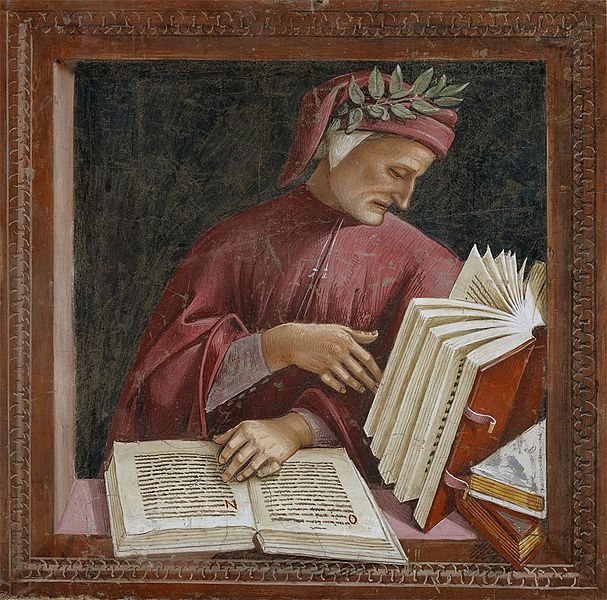
Dante | The Core Curriculum

1302 – Dante Alighieri is exiled from Florence

File:Wolfgang-amadeus-mozart 2.jpg - Wikimedia Commons

1756 – Birthday of Wolfgang Amadeus Mozart, in full Johann Chrysostom Wolfgang Amadeus Mozart, baptized as Johannes Chrysostomus Wolfgangus Theophilus Mozart. A prolific & influential composer of the Classical era. Born in Salzburg, he showed prodigious ability from his earliest childhood. Already competent on keyboard & violin, he composed from the age of 5 & performed before European royalty. At 17, Mozart was engaged as a musician at the Salzburg court, but grew restless & traveled in search of a better position. While visiting Vienna in 1781, he was dismissed from his Salzburg position. He chose to stay in the capital, where he achieved fame but little financial security.
Mozart’s physical appearance described him as “a remarkably small man, very thin and pale, with a profusion of fine, fair hair of which he was rather vain, except for his large intense eyes, he gave no signs of his genius.” His facial complexion was pitted, a reminder of his childhood case of smallpox. He loved elegant clothing. Of his voice his wife later wrote that it “was a tenor, rather soft in speaking and delicate in singing, but when anything excited him, or it became necessary to exert it, it was both powerful and energetic”.

Mozart usually worked long & hard, finishing compositions at a tremendous pace as deadlines approached. He often made sketches & drafts; unlike Beethoven’s these are mostly not preserved, as his wife sought to destroy them after his death.

Mozart lived at the center of the Viennese musical world, & knew a great number & variety of people: fellow musicians, theatrical performers, fellow Salzburgers, & aristocrats, including some acquaintance with the Emperor Joseph II. He enjoyed billiards & dancing, & kept pets: a canary, a starling, a dog, & a horse for recreational riding. He had a startling fondness for scatological humor, which is preserved in his surviving letters, notably those written to his cousin Maria Anna Thekla Mozart around 1777–1778, & in his correspondence with his sister & parents. Mozart also wrote scatological music, a series of canons that he sang with his friends.

During his final years in Vienna, he composed many of his best-known symphonies, concertos, & operas, & portions of the Requiem, which was largely unfinished at the time of his death. The circumstances of his early death have been much mythologized. He was survived by his wife Constanze & two sons. He composed more than 600 works, many acknowledged as pinnacles of symphonic, concertante, chamber, operatic, & choral music. He is among the most enduringly popular of classical composers, & his influence is profound on subsequent Western art music

TOP 14 QUOTES BY FRIEDRICH WILHELM JOSEPH SCHELLING | A-Z Quotes

1775 – Birthday of Friedrich Wilhelm Joseph Schelling, German-Swiss philosopher Riddle of Man: German Idealism: Friedrich Wilhelm Joseph Schelling, a lecture by Rudolf Steiner

“…For Schelling, the world riddle consists in the fact that he sees himself, with his soul awakened to egohood, confronted by a seemingly mute and lifeless nature. Out of this nature the soul awakens. This fact reveals itself to human observation. And the knowing, feeling human spirit delves down into this nature and through this nature fills itself with an inner world that then becomes spiritual life within it. Could this be so if there did not exist between the soul and nature a deeply inward relatedness at first hidden from human cognition? But nature remains mute if the soul does not make itself into the instrument of nature’s speech; nature seems dead if the spirit of man does not free life from the spell of semblance (Schein). The secrets of nature must sound forth from the depths of the human soul. But in order for this not to be a deception, it must be the essential being of nature itself that speaks out of the human soul. And it must be true that the soul only seemingly goes down into its own depths when it knows nature; in actuality, when it wants to find nature, the soul must travel through subconscious passages in order to delve down with its own life into the cycle of nature’s weaving…”

Scientists say Verdi's music is the most relaxing in the world

1901 –Deathday of Giuseppe Verdi, Italian composer

1951 – Nuclear testing at the Nevada Test Site begins with Operation Ranger

2011 – Arab Spring: The Yemeni Revolution begins as over 16,000 protestors demonstrate in Sana’a

***

Ultra-Violet Archer

Poem answer to UVA’s song ‘piece by piece’:
The bow of color hovers like a hum
Beckoning within you
Tapping on your teeth
Whirling round your tongue
Waiting to be spit
Out thru your eyes
To reshape the spin
Calling to your playmates to meet you in the light
~hag

America the Beautiful

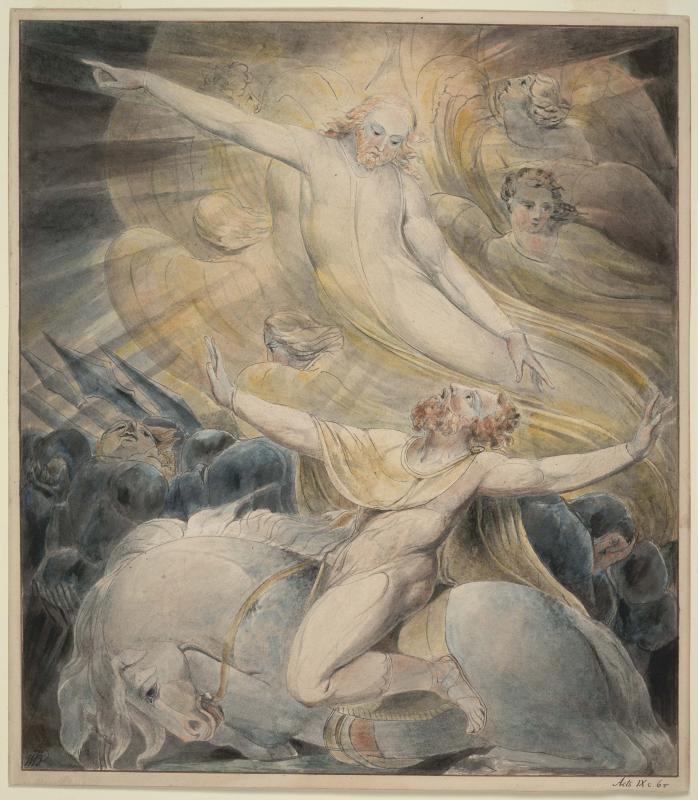
The Conversion of Saul – Works – THE HUNTINGTON LIBRARY, ART MUSEUM, AND  BOTANICAL GARDENS

In Honor of the anniversary of the vision of Paul on the road to Damascus I created this ‘I Think Speech’ Podcast

This image has an empty alt attribute; its file name is Columbia-america-by-Alice-Walker-pp.png

Dear friends –

We come here
To embrace what is common in each one of us –
Our love for a higher knowledge
which unites us in understanding.
Let this Light of Knowledge unite
Each and All of us,
Making rise in each,
The raising of the Other.

Thank you to all who participated in the live stream of our event. Here is a link to the recording of ‘Reclaiming the Wisdom of AmericaLove Donations Welcome

From Ite Van Til: Spirit of Place,
I am so happy you are there, so grateful you give your fragrance, your essence

To us, youngsters living together with you for years, gone out and dispersed, meeting each other after a year, and suddenly all four felt your presence at the same time.

To the farm barn where my love and i partied after our wedding
To the door where we first kissed
To the room where we looked at each other closely, speechless, and felt bygone times

To the house near the sea that we entered, visiting you as object for sale and feeling your presence in our guts, as you pulled us near

I long to feel you, to see you, to speak to you, as a friend
I know I need to let go of feelings and thoughts beforehand

Dear Spirit of Place
Please bear with us, one day we will meet

Special Thanks to our contributors:

Social Scientist Anne Nicholson, Anne Dale & Sally Greenberg

Singer/composer/producer: Ultra-Violet Archer

Stewart Lundy co-owns Perennial Roots Farm in Accomac, Virginia. Since 2010, he and his wife Natalie have farmed with a vision of reducing waste and growing as much of their own food as possible. They run a vegetable CSA as well as raising cattle, sheep, & hogs. They are currently finishing their own translation of Rudolf Steiner’s Agriculture Course.

Rosemary McMullen, Ph.D. in English literature, taught several decades at the college level, is certified in poetry therapy, family constellations, Waldorf teacher training, and biodynamic agriculture. She has facilitated group work in many of the above fields.  Publications include essays, poetry, and fiction. She is a professional editor; she researches and blogs on emergent topics: rosemarymcmullen.blogspot.com and  TimeSculpture2011.blogspot.com

There are many of us that feel this theme of AMERICA is worthy of continued investigation. Our presentation is meant to be the start of an ongoing conversation. And so with that in mind I wanted to feature these other events, for those that would like to continue this work.


All Meetings begin at 7:30 with informal conversation at 7:15
Jan. 27, Feb. 3, 10, 24, March 3, 10 Exploring the Spiritual – Historical Background of America
Some members of our local community have been studying the Templar impulses and Carl Stegmann’s work in his book “The Other America”. These meetings will be carried by the following people: Betty Staley, Ann Matthews, Brian Gray, Alice Stamm, Sanford Miller, Paula Sullivan, and Rita Roxas.
Jan. 27: The Spiritual Geography of America
Feb. 3: A Native American Voice
Feb. 10:  Founding Impulses
Feb. 24: Esoteric Background of Religions in America
March 3: Nineteenth to the Twenty-first Century: Impulses of a New Age
March 10: What are the Tasks of America Today: Kindred Souls

For more information
 Join Zoom Meeting https://us02web.zoom.us/j/83508728525?pwd=U0dtcU5DWjd5UGVOd1pySmJZN1FoUT09
Meeting ID: 835 0872 8525
Passcode: 644180
One tap mobile
+16699006833,,83508728525#,,,,*644180# US (San Jose)
+13462487799,,83508728525#,,,,*644180# US (Houston)

Donate to Faust Branch
 

The Goddesses of America
A 7-week group course with Lila Tresemer

New group starting now, and you can join anytime
Few people realize that there clearly exist feminine archetypes ~ guiding lights that can help us balance the strong masculine energies that rule our nation, which can be physically located in the National Mall in Washington, D.C.

Jacob Needleman beautifully writes: “We need to rediscover the deeper, mythic meaning of our heroes and our nation…. Adults need mythic symbols just as much ~ or even more ~ than children. We need to remythologize the idea of America.” (Excerpt from The American Soul: Rediscovering the Wisdom of the Founders, Penguin/Random House 2003)

***

Yerki Antrodorf

THE CALENDAR OF THE SOUL, by Rudolf Steiner, translated – with added titles – by Roy Sadler
(who would be happy to share in the comments section any thoughts anyone may have about the translations)
v43
Epiphany IV
THE CONSECRATION OF THE WORLD
In winter’s depths
true spirit presence warms;
it makes appearance real
and through the forces of the heart
empowers earth life’s newborn glory;
the soul’s revitalising fire in the human core
defies world cold.
v10
Trinity II
THE CONSECRATION OF THE SOUL
To summer’s heights
the sunlight’s being rises;
it lifts my human feeling far and wide
and into the sublime, the cosmic harmony
wherein a dawning vision’s intimating faintly,
in future you will know:
a holy being felt you now.

***

The Moon and the Winter Hexagon

25 January 2021 – “Speaking with the Stars”: Watch Bella Luna journey across a field of stars termed the “Winter Hexagon.”

Tanya Jacobsz Art | Vibrant colors of winter
Tanya Jacobs

Rudolf Steiner’s Lectures on this day

ON THIS DAY IN HISTORY

Apostle! -a sonnet for St. Paul | Malcolm Guite

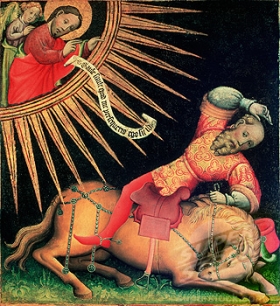
The Feast of the Conversion of Saint Paul on the road to Damascus.  Before this, he was known as Saul, “a Pharisee of Pharisees”, who “intensely persecuted” the followers of Jesus.

The Acts of the Apostles says that Paul was on his way from Jerusalem to Syrian Damascus with a mandate issued by the High Priest to seek out & arrest followers of Jesus, with the intention of returning them to Jerusalem as prisoners for questioning & possible execution. The journey is interrupted when Paul sees a blinding light, & communicates directly with a divine voice.

Acts 9 tells the story as a third-person narrative: As he neared Damascus on his journey, suddenly a light from heaven flashed around him. He fell to the ground and heard a voice say to him, “Saul, Saul, why do you persecute me?” “Who are you, Lord?” Saul asked. “I am Jesus, whom you are persecuting,” he replied. “Now get up and go into the city, and you will be told what you must do.” The men traveling with Saul stood there speechless; they heard the sound but did not see anyone. Saul got up from the ground, but when he opened his eyes he could see nothing. So they led him by the hand into Damascus. For three days he was blind, and did not eat or drink anything.

Acts 9:3–9, NIV

Ananias restores Saul's sight – Art and the lectionary

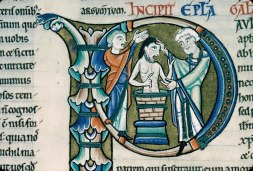
The account continues with a description of Ananias of Damascus receiving a divine revelation instructing him to visit Saul at the house of Juda on the Street Called Straight & there lay hands on him to restore his sight. Ananias is initially reluctant, having heard about Saul’s persecution, but obeys the divine command:

Then Ananias went to the house and entered it. Placing his hands on Saul, he said, “Brother Saul, the Lord—Jesus, who appeared to you on the road as you were coming here—has sent me so that you may see again and be filled with the Holy Spirit.” Immediately, something like scales fell from Saul’s eyes, and he could see again. He got up and was baptized, and after taking some food, he regained his strength.

Acts 9:13–19, NIV

Nikolai Bodarevsky

Acts’ second telling of Paul’s conversion occurs in a speech Paul gives when he is arrested in Jerusalem.[Acts 22:6-21] Paul addresses the crowd & tells them of his conversion, with a description essentially the same as that in Acts 9. Acts’ third discussion of Paul’s conversion occurs when Paul addresses King Agrippa, defending himself against the accusations of antinomianism that have been made against him. [Acts 26:12-18] This account is more brief than the others. The speech here is again tailored for its audience, emphasizing what a Roman ruler would understand: the need to obey a heavenly vision,[Acts 26:19]  & reassuring Agrippa that Christians were not a secret society.

The conversion of Paul, in spite of his attempts to completely eradicate Christianity, is seen as evidence of the power of Divine Grace: “no fall is so deep that grace cannot descend to it” & “no height so lofty that grace cannot lift the sinner to it.” It also demonstrates “God’s power to use everything, even the hostile persecutor, to achieve the divine purpose.” The transforming effect of Paul’s conversion influenced the clear antithesis he saw “between righteousness based on the law,” i.e. the letter of the law, which he had sought in his former life; & “righteousness based on the death of Christ,” which he describes, for example, in the Epistle to the Galatians.

Interesting that in rural England, the feast day celebrated on 25 January, functioned much like Groundhog Day does in our modern-day US. With prophecies ranged from fine days predicting good harvests, to clouds & mists signifying pestilence & war in the coming months.

Praying with Blessed Henry Suso in Lent

1366 – Deathday of Henry Suso, a German Dominican friar & mystic, the most popular writer of the 14th century. He is also notable for defending Meister Eckhart’s legacy after Eckhart was condemned for heresy. Suso also studied philosophy in Strasbourg, where he would have come into contact with Meister Eckhart, & Johannes Tauler, both celebrated mystics. Suso was esteemed as a preacher, in the cities of Swabia, Switzerland, Alsace, & the Netherlands, speaking with individuals of all classes who were drawn to him by his attractive personality, & to whom he became a personal director in the spiritual life. Suso was reported to have established among the Friends of God a society which he called the Brotherhood of the Eternal Wisdom. The so-called Rule of the Brotherhood of the Eternal Wisdom is a free translation of a chapter of his Horologium Sapientiae, which did not make its appearance until the 15th  century. Suso was beatified in 1831 by Pope Gregory XVI.

Lucas Cranach, the Younger - Gelonch-Viladegut Collection

1586 – Deathday of Lucas Cranach the Younger, German painter.

Sir Edmond Halley (1656-1742), English Astronomer, Appearance Editorial  Stock Image - Image of design, appearance: 130843969

1742 – Deathday of Edmond Halley, English astronomer, geophysicist, mathematician, meteorologist, & physicist. He was the second Astronomer Royal in Britain. From an observatory he constructed on Saint Helena, Halley recorded a transit of Mercury across the Sun. He realized a similar transit of Venus could be used to determine the size of the Solar System. He also used his observations to expand contemporary star maps. He aided in proving Isaac Newton‘s laws of motion, & funded the publication of Newton’s influential Philosophiæ Naturalis Principia Mathematica. From his September 1682 observations, he used the laws of motion to compute the periodicity of Halley’s Comet in his 1705 Synopsis of the Astronomy of Comets. It was named after him upon its predicted return in 1758, which he did not live to see. Beginning in 1698, he made sailing expeditions & made observations on the conditions of terrestrial magnetism. In 1718, he discovered the proper motion of the “fixed” stars.

Every Day Is Special: January 25 – Strides in Tele- Tech Day

1881 – Thomas Edison & Alexander Graham Bell form the Oriental Telephone Company.

1882 – Birthday of Virginia Woolf, English novelist, essayist, short story writer, & critic

Image result for Nellie Bly completes her round-the-world journey in 72 days

1890 – Nellie Bly completes her round-the-world journey in 72 days.

Image result for 1915 – Alexander Graham Bell inaugurates U.S. transcontinental telephone service,

1915 – Alexander Graham Bell inaugurates U.S. transcontinental telephone service, speaking from New York to Thomas Watson in San Francisco.

Timeline of the Egyptian revolution of 2011 - Wikipedia

2011 – The first wave of the Egyptian revolution begins throughout the country, marked by street demonstrations, rallies, acts of civil disobedience, riots, labor strikes, & violent clashes.

***

christianspencer on Twitter: "TANAGER GALACTICA Photo Christian Spencer A  green headed tanager or saira sete cores flies in front of the sun  revealing wings of rainbows created by the prism effect. Photoshop
Chris Spencer

POD (Poem Of the Day)

~Having seen blue starlight filter thru
The outstretched wings of a bird
I stand before you naked & new…
~hag

***

Spirit of Place

The Wizard of Oz Ruby Slippers No Place Like Home Photo Refrigerator Magnet  | Starbase Atlanta

Tune into TODAY’sI Think Speech’ Podcast

Dear Friends – Dorothy was right: There’s no place like home. As we journey thru life, dodging the occasional wicked witch, the ‘Spirit of Place’, which perhaps drew us to our home, creates a definite ambiance that we live with. But do we recognize it? Do we honor it, & seek to know its nature? If we work to cultivate a relationship with our Spirit of Place, we might even discover a Munchkin or two, over the rainbow or just across the threshold…

Spirits of Crown Point - Fine art Native American spiritual theme for sale  at the art gallery of where art meets the heart

Many indigenous & tribal cultures around the world are deeply concerned with Spirits of Place in their landscape. The concept has echoed thru the ages. It derives from an ancient & widespread knowing that our world is occupied by gods, or spirits, who want to be propitiated. Genius loci is the Latin term for the Spirit or Guardian deity of a place.

TOP 8 SPIRIT OF PLACE QUOTES | A-Z Quotes

For me, the ‘Spirit of Place’ refers to the unique, distinctive character of a location or abode; often cherished in folk tales, festivals & celebrations; explored by artists & writers thruout the ages. The concept is prominent in the invisible weave of culture -stories, art, memories, beliefs, histories, etc.; as well as in the tangible physical aspects of a place – monuments, boundaries, rivers, woods, architecture, rural crafts styles, pathways, views, etc… And of course we must include its interpersonal aspects, bringing in the presence of the ancestors.

7 Shinto Kami You'll Meet in Japan

These Spirits of Place are explicitly recognized by some of the world’s main religions: The “Shinto gods” are called kami. They are sacred spirits which take the form of things in the environment, such as wind, rain, mountains, trees, rivers &  fertility. Human beings become kami after they die & are revered by their families as ancestral spirits. Many Hindu sects work with this concept, as do Buddhists.

Andy Goldsworthy Environmental Sculptures | Designs & Ideas on Dornob

We might understand it thru the exploration of ley lines, feng shui, or perhaps feel it in urban spaces – in the architecture, back alleys or gardens.  Modern earth art, or environment art, explores the contribution of natural/ephemeral sculpture as an offering to the Spirit of Place.

Chris Drury | Stour Valley Arts | House in nature, Natural building,  Earthship

We will explore this for ourselves with Rosemary McMullen* during our Sunday Presentation ‘Reclaiming the Wisdom of America’, to help us create cultural forms that ‘re-enchant our land’. If we are able to live into our individual Genius loci, perhaps that will better lead us into a relationship with the overarching Folk Spirit of America that we all share. (Have paper & colored pencils at the ready)

Someone asked poet E. E. Cummings what home was for him. He responded poetically, talking about his lover. Home was “the stars on the tip of your tongue, the flowers sprouting from your mouth, the roots entwined in the gaps between your fingers, the ocean echoing inside your ribcage.” What about you? If you were asked to write or draw a description of what makes your place a home, what would that look like? This seems like a good time to identify & honor the influences that inspire us to live into our inner sense of home, where the Spirits of Place hope to inspire us.

~hag

Great American native Spirit over Mr. Rusmore | Native american history,  Native american culture, Native american indians

Rosemary McMullen, Ph.D. in English literature, taught several decades at the college level, is certified in poetry therapy, family constellations, Waldorf Education, and biodynamic agriculture. She has facilitated group work in many of the above fields.  Publications include essays, poetry, and fiction. She is a professional editor; she researches and blogs on emergent topics: rosemarymcmullen.blogspot.com and  TimeSculpture2011.blogspot.com

***

22 January 2021- “Speaking with the Stars”

Beka Lisa Art: Spirit Painting

Rudolf Steiner’s Lectures on this day

ON THIS DAY IN Occult HISTORY

Francis Bacon - Ville Löppönen
Francis Bacon – Ville Löppönen

1561 – Birthday of Francis Bacon – English philosopher, statesman, scientist, jurist, orator, & author. He served both as Attorney General & as Lord Chancellor of England. After his death, he remained extremely influential through his works, especially as philosophical advocate of materialism & practitioner of the scientific method during the scientific revolution. Bacon died of pneumonia, with one account by John Aubrey stating that he had contracted the condition while studying the effects of freezing on the preservation of meat. Rudolf Steiner speaks about him in a previous incarnation as Haroun al Raschid

Crossing Lessing's Ugly Ditch: Karl Barth on Union with Christ – Reformed  Forum

1729 – Birthday of Gotthold Ephraim Lessing, a German writer, philosopher, dramatist, publicist & art critic – one of the most outstanding representatives of the Enlightenment era. His plays & theoretical writings substantially influenced the development of German literature. He is widely considered by theatre historians to be the first dramaturg in his role at Abel Seyler’s Hamburg National Theatre.

From Karmic Relationships: Esoteric Studies – Volume I, Lecture 11 by Rudolf Steiner:

“Another personality, very well-known to you by name, is of exceptional interest in connection with investigations into karma. It is Lessing.

The circumstances of Lessing’s life, I may say, have always interested me to an extraordinary degree. Lessing is really the founder of the better sort of journalism, the journalism that has substance and is really out to accomplish something. Before Lessing, poets and dramatists had taken their subjects from the aristocracy. Lessing, on the other hand, is at pains to introduce bourgeois life, ordinary middle-class life, into the drama, the life concerned generally with the destinies of men as men, and not with the destinies of men in so far as they hold some position in society or the like. Purely human conflicts — that is what Lessing wanted to portray on the stage. In the course of his work he applied himself to many great problems, as for example when he tried to determine the boundaries of painting and of poetry in his Laocoon. But the most interesting thing of all is the powerful impetus with which Lessing fought for the idea of tolerance. You need only take his Nathan the Wise and you will see at once what a foremost place this idea of tolerance has in Lessing’s mind and life. In weaving the fable of the three kings in Nathan the Wise, he wants to show how the three main religions have gone astray from their original forms and are none of them really genuine, and how one must go in search of the true form, which has been lost. Here we have tolerance united with an uncommonly deep and significant idea.

Interesting, too, is the conversation between Freemasons, entitled Ernst und Falk, and much else that springs from Freemasonry. What Lessing accomplished in the way of critical research into the history of religious life is, for one who is able to judge its significance, really astounding. But we must be able to place the whole Lessing, in his complete personality, before us.

We begin to get an impression of Lessing when we observe, shall I say, the driving force with which he hurls his sentences against his opponents. He wages a polemic against the civilisation of Middle Europe — quite a refined and correct polemic, but at every turn hitting straight home. You must here observe a peculiar nuance in Lessing’s character if you want to understand the make-up of his life. On the one hand we have the sharpness, often caustic sharpness, in such writings as The Dramatic Art of Hamburg, and then we have to find the way over, as it were, to an understanding, for example, of the words used by Lessing when a son had been born to him and had died directly after birth. He writes somewhat as follows in a letter: Yes, he has at once taken leave again of this world of sorrow; he has thereby done the best thing a human being can do. In so writing, Lessing is giving expression to his pain in a wonderfully brave way, not for that reason feeling the pain one whit less deeply than someone who can do nothing but bemoan the event. This ability to draw back into himself in pain was characteristic of the man who at the same time knew how to thrust forward with vigour when he was developing his polemics. This is what makes it so affecting to read the letter written when his child had died immediately after birth, leaving the mother seriously ill.

Lessing had moreover this remarkable thing in his destiny — and it is quite characteristic, when one sets out to find the karmic connections in his case — that he was friends in Berlin with a man who was in every particular his opposite, namely, Nikolai; an example of a true philistine. Although a friend of Lessing, he was none the less a typical philistine-bourgeois; and he had visions, most strange and remarkable visions.

Lessing, genius as he was, had no visions, not even dreams. Nikolai literally suffered from visions. They came, and they went away only after leeches had been applied. Yes, in extremity they actually applied leeches to him, in order that he might not be forever tormented by the spiritual world which would not let him alone.

At the close of his life Lessing wrote the remarkable essay, The Education of the Human Race, at the end of which, quite isolated, as it were, the idea of repeated earth-lives appears. The book shows how mankind goes through one epoch of development after another, and how the Gods gave into man’s hand as a first primer, so to speak, the Old Testament, and then as a second primer the New Testament, and how in the future a third book will come for the further education of the human race. And then all at once the essay is brought to a close with a brief presentation of the idea that man lives through repeated earth-lives. And there Lessing says, again in a way that is absolutely in accord with his character: The idea of repeated earth-lives does not seem so absurd, considering that it was present in very early times, when men had not yet been spoilt by school learning? The essay then ends with a genuine panegyric on repeated earth-lives, finishing with these beautiful words: “Is not all Eternity mine?”

When a man like Lessing utters a profound aphorism such as this on repeated earth-lives, there is, properly speaking, no possibility of ignoring it.

You will readily see that the personality of Lessing is interesting in the highest degree from a karmic point of view, in relation to his own passage through different earth-lives. In the second half of the 18th century the idea of repeated earth-lives was by no means a commonly accepted one. It comes forth in Lessing like a flash of lightning, like a flash of genius. We cannot account for its appearance; it cannot possibly be due to Lessing’s education or to any other influence in this particular life. We are compelled to ask how it may be with the previous life of a man in whom at a certain age the idea of repeated earth-lives suddenly emerges — an idea that is foreign to the civilisation of his own day — emerges, too, in such a way that the man himself points to the fact that the idea was once present in very early times. The truth is that he is really bringing forward inner grounds for the idea, grounds of feeling that carry with them an indication of his own earth-life in the distant past. Needless to say, in his ordinary surface-consciousness he has no notion of such connections. The things we do not know are, however, none the less true. If those things alone were true that many men know, then the world would be poor indeed in events and poor indeed in beings”.

The Private Life of Lord Byron by Antony Peattie review – portrait of a  paradox | Books | The Guardian
George Gordan

1788 –Birthday of Lord Byron, a British poet, politician, & a leading figure in the Romantic movement. Among his best-known works are the lengthy narrative poems, Don Juan & Childe Harold’s Pilgrimage, & the short lyric poem, “She Walks in Beauty”.

He travelled extensively across Europe, especially in Italy, where he lived for seven years. Later in his brief life, Byron joined the Greek War of Independence fighting the Ottoman Empire, for which many Greeks revere him as a national hero.

He died in 1824 at the age of 36 from a fever contracted while in Missolonghi. Often described as the most flamboyant & notorious of the major Romantics, Byron was both celebrated & castigated in life for his aristocratic excesses, including huge debts, numerous love affairs – with men as well as women, as well as rumors of a scandalous liaison with his half-sister – &self-imposed exile.

He also fathered Ada, Countess of Lovelace, whose work on Charles Babbage’s Analytical Engine is considered a founding document in the field of computer science.

Rudolf Steiner speaks about Lord Byron in the same lecture with Lessing- Karmic Relationships: Esoteric Studies – Volume I, Lecture 11:

“I began to take a special interest in the life of Lord Byron. And at that same time I got to know some Byron enthusiasts. One of them was the poetess, Marie Eugenie delle Grazie, of whom I shall have much to say in my autobiography. During a certain period of her life she was a Byron enthusiast. Then there was another, a most remarkable personality, a strange mixture of all possible qualities Eugen Heinrich Schmidt. Many of you who know something about the history of Anthroposophy will be familiar with his name.

He came to Vienna, a tall, slight man filled with a burning enthusiasm, which came to expression at times in very forcible gestures and so on. It was none the less genuine for that. And it was just this enthusiasm of Schmidt’s that gave me the required “jerk,” as it were. I thought I would like to do him a kindness, and as he had recently written a most enthusiastic and inspired article on Lord Byron, I introduced him to my other Byron enthusiast, Marie Eugenie delle Grazie. And now began a wildly excited discussion on Byron. The two were really quite in agreement, but they carried on a most lively and animated debate. All we others who were sitting round — a whole collection of theological students from the Vienna Catholic Faculty were there, who came every week and with whom I had made friends — all we others were silent. And the two who were thus conversing about Byron were sitting like this. — Here was the table, rather a long one, and at one end sat delle Grazie and at the other end, Eugen Heinrich Schmidt, gesticulating with might and main. All of a sudden his chair slips away from under him, and he falls under the table, his feet stretching right out to delle Grazie. I can tell you, it was a shock for us all! But this shock helped me to hit upon the solution of a particular problem.

Let me tell you of it quite objectively, as a matter of history. All that they had been saying about Byron had made a strong impression upon me, and I began to feel the keenest need to know how the karmic connections might be in the case of Byron. It was, of course, not so easy. But now I suddenly had the following experience. — It was really as if the whole picture of this conversation, with Eugen Heinrich Schmidt being so terribly impolite with his foot! — as if this picture had suddenly drawn my attention to the foot of Lord Byron, who was, as you know, club-footed. And from that I went on to say to myself: My beloved teacher, too, had a foot like that; this karmic connection must be investigated. I have already given you an example, in the affliction of the knee from which Eduard von Hartmann suffered, of how one’s search can be led back through peculiarities of this kind. I was able now to perceive the destiny of the teacher whom I loved and who also had such a foot. And it was remarkable in the highest degree to observe how on the one hand the same peculiarity came to view both in the case of Byron and of my teacher, namely, the club-foot; but how on the other hand the two persons were totally different from one another, Byron, the poet of genius, who in spite of his genius — or perhaps because of it — was an adventurer; and the other a brilliant geometrician such as one seldom finds in teaching posts, a man at whose geometrical imagination and treatment of descriptive geometry one could only stand amazed.

In short, having before me these two men, utterly different in soul, I was able to solve the problem of their karma by reference to this seemingly insignificant physical detail. This detail it was that enabled me to consider the problems of Byron and my geometry teacher in connection with one another, and thereby to find the solution”.

Steiner continues this thread in Karmic Relationships, Vol. V: Lecture IV

“The two men were there before me in this inner picture. And the karma of my teacher, as well as the peculiarity of which I have told you, led me to the discovery that in the 10th or 11th century, both these souls had lived in their earlier incarnations far over in the East of Europe where they came one day under the influence of a legend, a prophecy. This legend was to the effect that the Palladium, which in a certain magical way helped to sustain the power of Rome, had been brought to that city from ancient Troy, and hidden. When the Emperor Constantine conceived the wish to carry Roman culture to Constantinople he caused the Palladium to be transported with the greatest pomp and pageantry to Constantinople and hidden under a pillar, the details of which gave expression to his overweening pride. For he ordered an ancient statue of Apollo to be set at the top of this pillar, but altered in such a way as to be a portrait of himself. He caused wood to be brought from the Cross on which Christ had been crucified and shaped into a kind of crown which was then placed on the head of this statue. It was the occasion for indulging in veritable orgies of pride!

The legend went on to prophesy that the Palladium would be transferred from Constantinople to the North and that the power embodied in it would be vested eventually in a Slavonic Empire. This prophecy came to the knowledge of the two men of whom I have been speaking and they resolved to go to Constantinople and to carry off the Palladium to Russia. They did not succeed. But in one of them especially — in Byron — the urge remained, and was then transformed in the later life into the impulse to espouse the cause of freedom in Greece. This impulse led Byron, in the 19th century, to the very region, broadly speaking, where he had searched for the Palladium in an earlier incarnation.”

File:AugustStrindberg.jpg - Wikimedia Commons

1849 – Birthday of August Strindberg, a Swedish playwright, novelist, poet, essayist & painter. A prolific writer who often drew directly on his personal experience, Strindberg’s career spanned four decades, during which time he wrote over 60 plays & more than 30 works of fiction, autobiography, history, cultural analysis, & politics. A bold experimenter & iconoclast throughout, he explored a wide range of dramatic methods & purposes, from naturalistic tragedy, monodrama, & history plays, to his anticipations of expressionist & surrealist dramatic techniques.  From his earliest work, Strindberg developed innovative forms of dramatic action, language, & visual composition. He is considered the “father” of modern Swedish literature & his The Red Room (1879) has frequently been described as the first modern Swedish novel.

During the 1890s he spent significant time abroad engaged in scientific experiments and studies of the occult. A series of psychotic attacks between 1894 & 1896 (referred to as his “Inferno crisis”) led to his hospitalization & return to Sweden. Under the influence of the ideas of Emanuel Swedenborg, he resolved after his recovery to become “the Zola of the Occult”. In 1898 he returned to playwriting with ‘To Damascu’s, which, like The Great Highway (1909), is a dream-play of spiritual pilgrimage. His ‘A Dream Play’ (1902) – with its radical attempt to dramatize the workings of the unconscious by means of an abolition of conventional dramatic time & space & the splitting, doubling, merging, & multiplication of its characters – was an important precursor to both expressionism & surrealism. He also returned to writing historical drama, the genre with which he had begun his playwriting career. He helped to run the Intimate Theatre from 1907, a small-scale theatre, modelled on Max Reinhardt’s Kammerspielhaus, that staged his chamber plays (such as The Ghost Sonata)

Rudolf Steiner gives an amazing account of his former life in as an initiate in ancient Egypt, in a karmic knot with another. They then both reincarnated together again Strindberg as Julia & his friend as Titus Livius. This account must be read in full.

About – The Wandering Historian

1901 – Deathday of Queen Victoria ruling over the United Kingdom, Ireland & India. She inherited the throne aged 18. The United Kingdom was already an established constitutional monarchy, in which the sovereign held relatively little direct political power. Privately, Victoria attempted to influence government policy & ministerial appointments; publicly, she became a national icon who was identified with strict standards of personal morality.

Victoria married her first cousin, Prince Albert of Saxe-Coburg. Their nine children married into royal & noble families across the continent, tying them together and earning her the sobriquet “the grandmother of Europe”. After Albert’s death in 1861, Victoria plunged into deep mourning & avoided public appearances. As a result of her seclusion, republicanism temporarily gained strength, but in the latter half of her reign her popularity recovered. Her Golden& Diamond Jubilees were times of public celebration.

Her reign of 63 years & seven months is known as the Victorian era. It was a period of industrial, cultural, political, scientific, & military change within the United Kingdom, & was marked by a great expansion of the British Empire. She was the last British monarch of the House of Hanover. Her son & successor, Edward VII, belonged to the House of Saxe-Coburg and Gotha, the line of his father.

Victoria wrote an average of 2,500 words a day during her adult life. From July 1832 until just before her death, she kept a detailed journal, which eventually encompassed 122 volumes. After Victoria’s death, her youngest daughter, Princess Beatrice, was appointed her literary executor. Beatrice transcribed and edited the diaries covering Victoria’s accession onwards, & burned the originals in the process. Despite this destruction, much of the diaries still exist.

Rudolf Steiner

1910 – Deathday of Johann Steiner, father of Rudolf Steiner

 “One spring day in 1860, an autocratic Hungarian magnate, a certain Count Hoyos, who owned several large estates in Austria, dismissed his game-keeper, because this game-keeper, Johannes Steiner wanted to marry Franziska Blie, one of the Count’s innumerable housemaids. Perhaps the old Count had a foreboding as to what a great spiritual revolution would be born of this marriage. (The baroque palace of Hom, where it happened, is still in the possession of the Hoyos family, and stands today just as it was one hundred years ago.) So Johannes Steiner had to look for another occupation, and got himself accepted as a trainee telegraphist and signalman by the recently opened Austrian Southern Railway. He was given his first job in an out-of-the-way request stop called Kraljevic (today in Yugoslavia), and there his first child, Rudolf, arrived on February 27, 1861. On the same day the child was taken for an emergency baptism to the parish Church of St. Michael in the neighboring village of Draskovec. The baptismal register was written in Serbo-Croat and Latin, and the entry still can be read today as of one Rudolfus Josephus Laurentius Steiner. “Thus it happened,” Rudolf Steiner writes in his autobiography, “that the place of my birth is far removed from the region where I come from.”

From the severity of the Puszta the family moved, when the boy was two years old, into one of the most idyllic parts of Austria, called “the Burgenland” since 1921. Comprising the foothills of the eastern Alps, it is of great natural beauty, very fertile, and drenched in history. It takes its name from the many Burgen, i.e. castles which at different times of history were erected on nearly every hill. During recent excavations coins bearing the head of Philip of Macedonia, the father of Alexander the Great, have been found near Neudörfl, where the Steiners now settled, and where a daughter and a younger son were added to the family.

The management of the Austrian Southern Railway seems to have taken a sympathetic view toward the promising boy, and agreed to move father Steiner as stationmaster to several small stations south of Vienna, so that the eldest son was able to attend good schools as a day student, and finally in 1879 could matriculate at the Technical University of Vienna, then one of the most advanced scientific institutions of the world. Until then Rudolf Steiner’s school life had been fairly uneventful, except that some of his masters were rather disturbed by the fact that this teen-ager was a voracious reader of Kant and other philosophers, and privately was engrossed in advanced mathematics.” ~From the intro to Christianity as Mystical fact

***

Sunday 24 January 2021 – Reclaiming the Wisdom of America 

2–4 pm CST – An interactive Zoom Presentation with

Hazel Archer-Ginsberg, Rosemary McMullen, Anne Nicholson, Stewart Lundy, Sally Greenberg, Anne Dale 

Anne Nicholson, Social Scientist & tech guru is our Host

Sally Greenberg – Opening Verse: Walt Whitman-Leaves of Grass

Hazel Archer will explore the concept of Columbia as the Folk Spirit of America, as seen from the perspective of the Native Peoples’, as well as the Founding Fathers. How do we renew this for our age of the consciousness soul, as a preparation for the unveiling of the New Isis-Sophia in the 7th epoch – to fulfill the true destiny of America?

Stewart Lundy of Perennial Roots Farm brings the connection of Bio-dynamics

Rosemary McMullen sets the scene for the ancestors – ‘Land Acknowledgement’, as a way for each participant to look at their current placement in America. A look also at how The 3 Realms of Culture, Rights, Economy, becomes 4-fold when we bring in the element of Ecology.

Artistic gesture: The Spirit of Place (Paper & Colored pencils suggested)

Sally Greenberg & Anne Dale: a contemplation of the expression of our Civil Responsibility that recommits us to our core values, to one another, & to the Spirit of Place & Time.

Breakout Groups: Social Sharing – What do you see is wanting to come into being in America? How will you contribute to it? Each will share their artistic creation in relation to these questions to see if something new arises.

Anne Nicholson: Plenary- Closing

Anne Dale – Closing: Verse for America by Rudolf Steiner

We are bringing Anthroposophy to the People! Our presentation will be screened along with many other offerings from around the country in conjunction with The People’s Inauguration’.

Only 100 zoom slots, so don’t be late

Time: Jan 24, 2021 02:00 PM Central Time (US and Canada)

Join Zoom Meeting

https://zoom.us/j/7052931041?pwd=Q1RNcDliYS9QK3JDV1hNQ1pxUmwwZz09

Meeting ID: 705 293 1041 – Passcode: dove

Dial by your location-Find your local number: https://zoom.us/u/a961qZZhF

Meeting ID: 705 293 1041 – Passcode: 664936

for more info. contact Events & Festivals Coordinator Hazel Archer-Ginsberg hag@rsChicago.org